Which Printable Reading Log Should You Use?
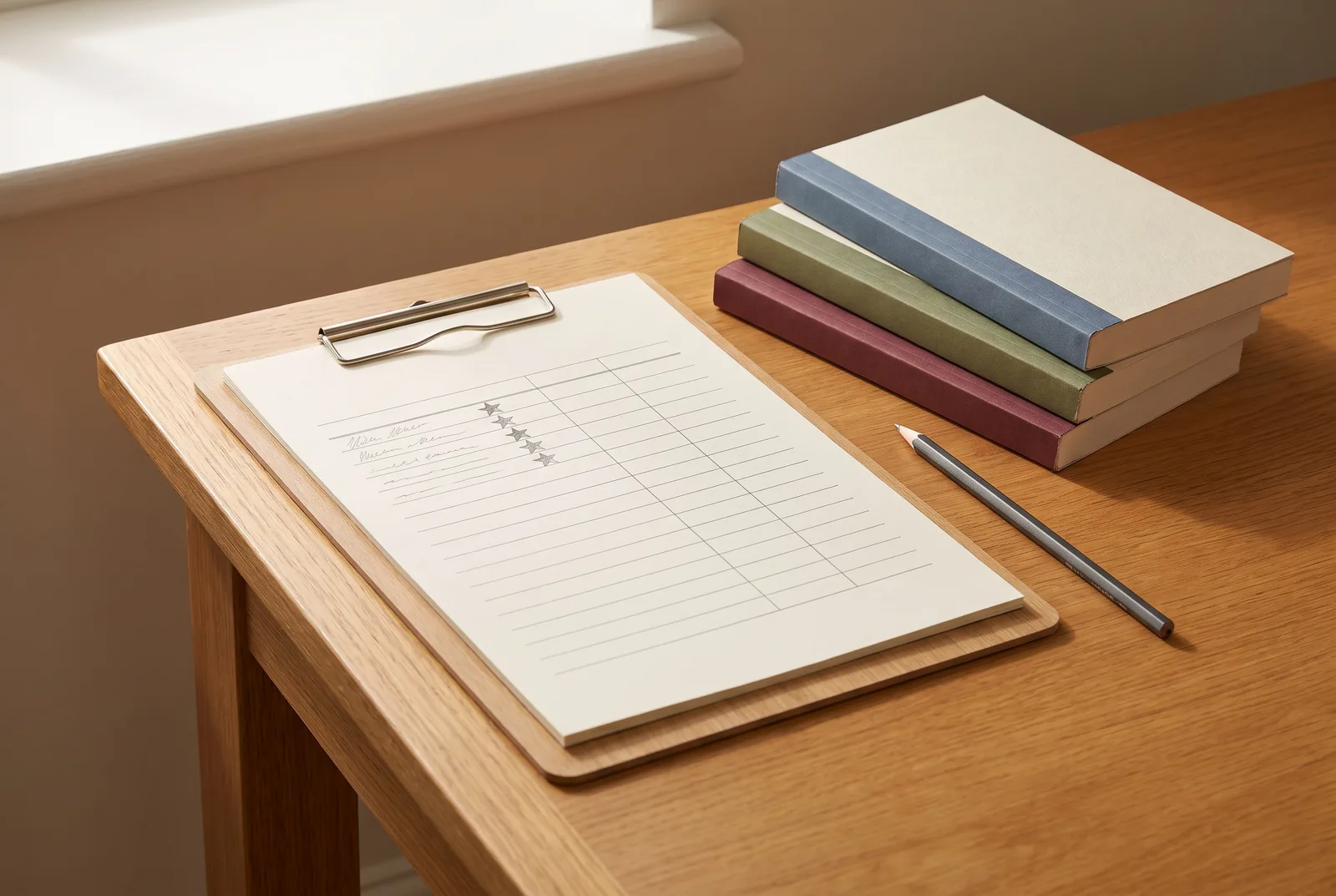
For most adults, use the classic printable reading log, twenty numbered rows with one line per finished book for title, author, dates, pages and five stars. For a child who is still learning to write, use a kids' log with three books per page and big handwriting lines. The weekly, monthly and summer layouts count days and minutes instead of books, and each one fits a different reader.
Which printable reading log fits which reader
Before you print anything, decide whether you want to count books or days. One line per finished book suits an adult with a shelf of titles, and the classic twenty-row sheet is that log. A row per day suits a school assignment, a habit or a summer program. A child who is still forming letters needs big lines and very few of them.
| Reader | Layout | What one line records |
|---|---|---|
| A child learning to write | Three books per page, big handwriting lines | One book: title, author, date and pages, a face to color instead of stars, and a line for the favorite part |
| An adult with many finished books | Twenty numbered rows on one sheet | One book: title, author, started, finished, pages and one to five stars |
| A weekly reader, often for school | Seven rows, Monday to Sunday | One day: book title, pages, minutes and a parent's or teacher's initials |
| A monthly reader building a habit | A grid of 31 day boxes | One day: a box colored in and the minutes read, with a monthly total below |
| A summer program | Ten weeks, one row each | One week: the dates, the books and the minutes, under a goal box with a reward line |
All five exist as free one-page PDFs on our printable reading log page, for US Letter and A4, with no sign-up. Print at 100%, or actual size, so the lines keep their spacing. Plain paper is fine for a sheet that lives in a folder. You can also rule any of the five by hand. A pencil, a ruler and the column list from the table are enough. A hand-ruled sheet also lets you drop a column you already know you will skip.
A child who is learning to write
A 5- or 6-year-old who is still forming letters needs a few big lines per book and lots of room. The layout for early writers holds three books on a page. Each book gets handwriting lines for the title, author, date and pages, plus a line for the favorite part. A face to color stands in for the star rating.
Split the work by who can do it. The child writes the title, or as much of it as they can, and colors the face. They tell you the favorite part and you write it down. An adult fills in the author, the date and the page count, the fields a child skips or guesses. Plan on about a page a month at the start. Keep the finished pages in a folder, in order, so the child can flip back through them.
Our kids' log is laid out this way, with three-line handwriting guides. By hand, draw three boxes down a sheet of plain paper and rule three lines about an inch apart in each. Add a circle in the corner for the face. The printed version saves the ruling. The hand-drawn one lets the child decorate the boxes, which for some 5-year-olds is the whole point.
An adult with a shelf of finished books
Use the classic log with its twenty numbered rows. Each row holds the title, the author, the dates you started and finished, the page count and five stars to shade. In an October 2025 survey by Pew Research Center, 75% of U.S. adults said they had read all or part of at least one book in the past year. One line per finished book is enough for nearly all of them.
A few habits keep a book log honest. Write the line the day you finish, while the ending is fresh. Twelve books entered in December lose their details first. Write a rating key once in the margin of the first sheet. Five stars for a book you would reread, say, and one for a book you wish you had put down. Then a four in January means the same as a four in November.
Shade the stars in pencil, since a book can gain a star a month later. What about a book you give up on? It still gets a line, with the page where you stopped and a small cross instead of stars.
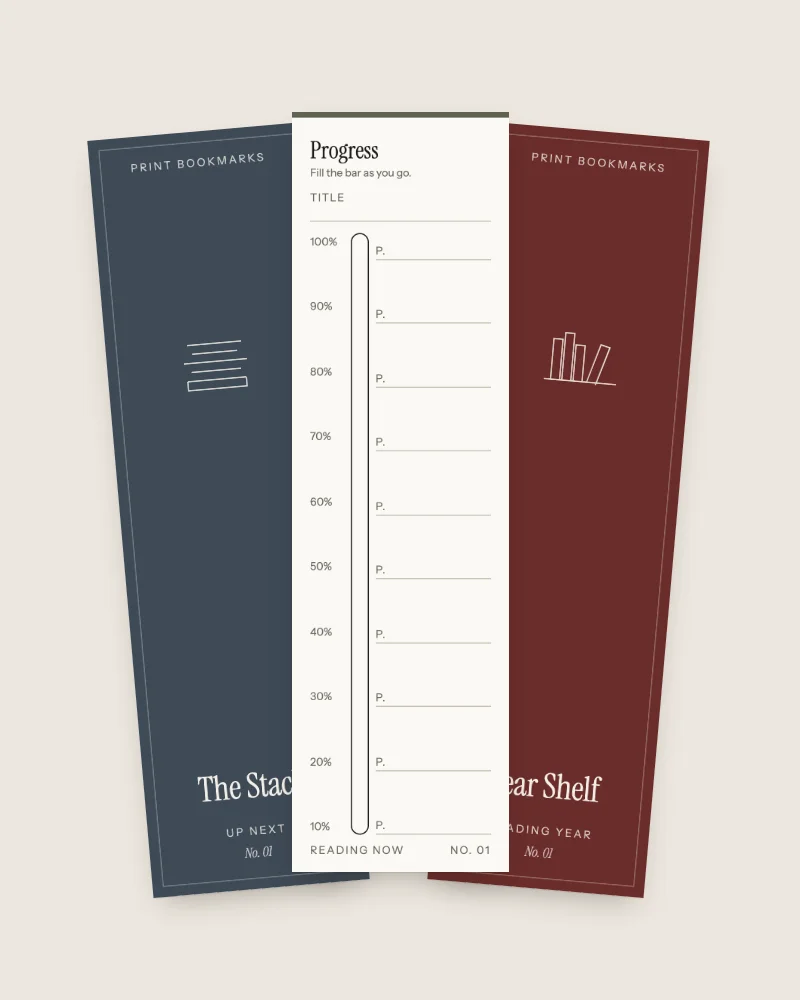
When the twenty rows fill, print a second sheet and write the year in its corner. If you would rather keep the record inside the book, the reading log tracker bookmark holds six books with a star each. It prints four to a sheet, and you will need a new one every six books. If you are unsure which columns you will really fill in, start with title, author and the date finished. Read what to write in it before you add more.
A reader who logs by the week, for school or for a habit
The weekly log runs Monday to Sunday with a row per day. Each row has the book, the pages, the minutes and a column where a parent or teacher initials. Weekly totals and a signature line sit at the bottom. Many school reading assignments ask for that form, so the sheet goes home in a folder on Monday and comes back signed on Friday.
For a child, fill in the row right after reading, with the book still on the table, and initial it the same evening. The usual failure is a sheet filled in from memory on Sunday night, with the same minutes in all seven boxes. If the teacher sets a minutes target, write it at the top of the sheet once. Then the child can see each day what is left.
For an adult building a habit, the same seven rows work with the initials column left blank or used for a tick. A week on one sheet is also the layout that gains most when you print on both sides of the sheet. Two weeks per sheet halves the paper over a school year, and the second week is on the back when the first one fills.
A reader who counts days in a month
The monthly log is a grid of 31 numbered day boxes, each with a line for the minutes read. A monthly total and a list of the books read sit below. No month or weekday is printed, so the same sheet works in February, in a 31-day month and again next year. It suits someone who wants to see a streak, with a box colored in on every day they read.
The mistake with a day grid is coloring a box for a day you did not read, to keep the streak unbroken. Leave it blank. The blank days tell you as much as the colored ones, and a month with 22 colored boxes is a good month. Write the minutes in the box the same day. Use the list below for titles finished that month, in the order you finished them.
If the grid is the layout for you, read how to keep a monthly log before you print twelve copies. Where the pages and minutes go decides whether you keep it up past March.
A summer program, at home or at the library
A summer log runs ten weeks, one row each, with dates, books and minutes. A goal box at the top has a line for the reward, and ten books wait to be colored in as the weeks pass. It fits a parent who wants one sheet on the fridge from the last day of school to the first. It also fits a library program that hands out a sheet in June and collects it in August.
Set the goal with the child in week one, in books or in minutes, whichever they can watch grow. Ten books in ten weeks is one a week. That fits picture books and asks too much of a 9-year-old on chapter books, so count minutes for the older child. Write a reward you can keep, a pool day or a trip to choose the next book. Color the week's book on the day the week ends, which is the one chore a 6-year-old can own entirely.
When a printed log is the wrong choice
A sheet cannot sort, search or total itself. If you finish well over fifty books a year, plan on a spreadsheet or an app. The classic sheet would need three copies and still could not tell you how many were audiobooks. The same goes for anyone who wants charts, a filter by genre or a record that follows them from phone to laptop.
Seymour Library's roundup on tracking reading goals lists reading journals, spreadsheets and apps such as Goodreads, The StoryGraph and Fable side by side. Its advice is that there is no one right way, so try what sounds interesting and see if it works for you.
A printed log is also the wrong choice when you want to keep your thoughts. A line holds a rating and a few words, and a reading journal with a page per book holds the rest. For a teacher collecting minutes from 25 children, the weekly sheets still come home in the folders. The totals belong in a spreadsheet, where a column adds itself.
Sources
- Seymour Library, How to Track Your Reading Goals (2026) (last checked 2026-10-05)
- Pew Research Center, Americans still opt for print books over digital or audio versions; few are in book clubs (2026) (last checked 2026-10-05)